Applications
GEOS is a general-purpose multiphysics simulator with capabilities spanning a broad range of subsurface energy applications. Its modular architecture and coupled physics framework make it well suited for problems that require integrated flow, transport, thermal, and geomechanical modeling. Our publications provide additional examples of GEOS-usage in practice.
Conventional Oil & Gas
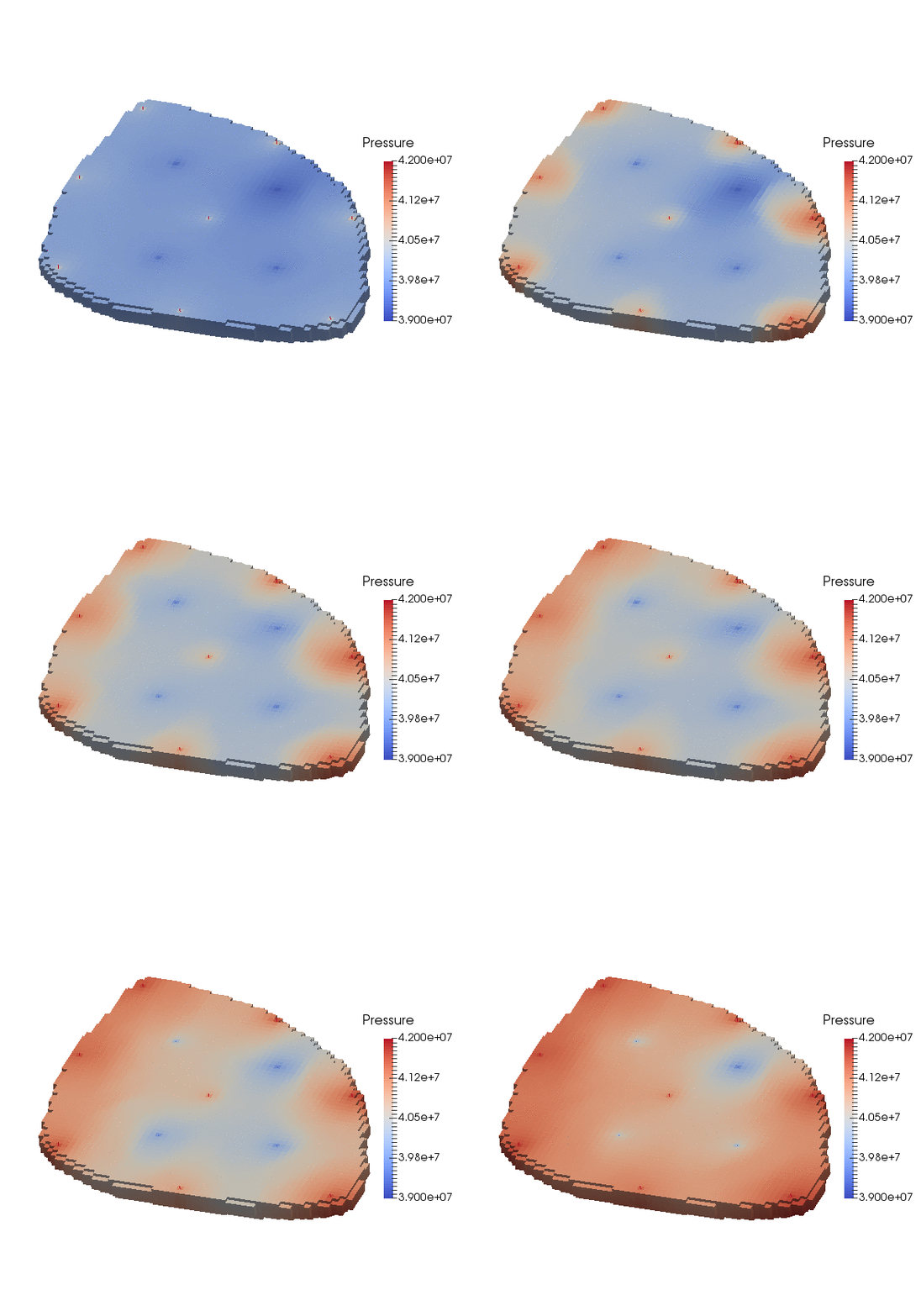
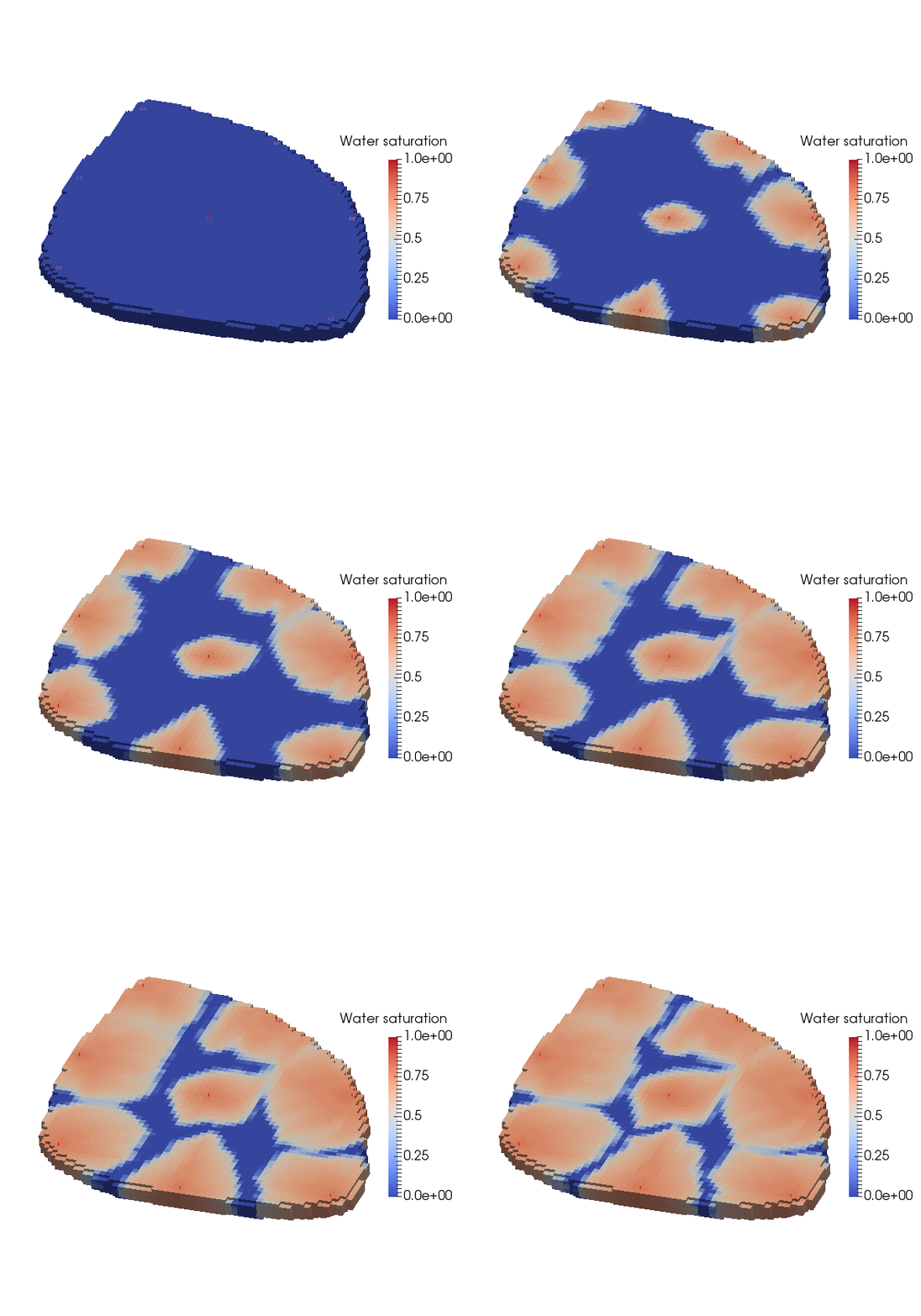
GEOS provides compositional and black-oil flow simulation capabilities with fully-coupled geomechanics for conventional reservoir management. Key capabilities include multiphase flow in heterogeneous formations, compaction and subsidence prediction, and fault-seal analysis. The unstructured mesh support and scalable parallel solvers enable detailed field-scale models that capture complex geologic features.
Unconventional Oil & Gas
For shale reservoirs and other tight systems, GEOS offers integrated hydraulic fracture propagation modeling coupled with reservoir flow simulation. This includes hydraulic fracture network generation, proppant transport, stimulated reservoir volume characterization, and production forecasting. The embedded discrete fracture model (EDFM) and phase-field fracture capabilities allow for detailed analysis of fracture-matrix interactions during stimulation and production.
Enhanced Geothermal Systems
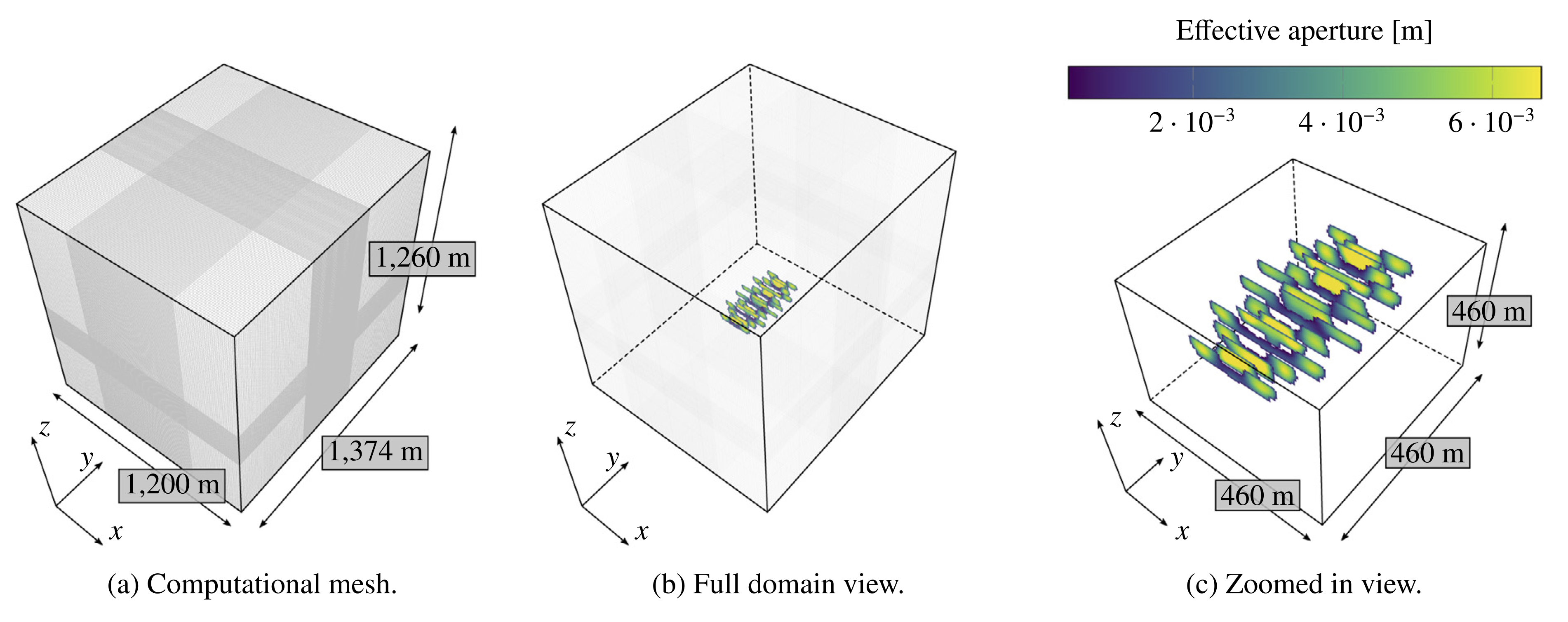
GEOS supports thermal-hydraulic-mechanical (THM) simulation for engineered geothermal systems. This includes modeling of thermal stimulation and hydro-shearing for reservoir creation, heat extraction and thermal drawdown prediction, induced seismicity assessment through coupled stress analysis, and fracture network connectivity evaluation. The tight coupling between thermal, hydraulic, and mechanical processes is essential for capturing the nonlinear feedbacks that govern EGS performance.
Carbon Storage
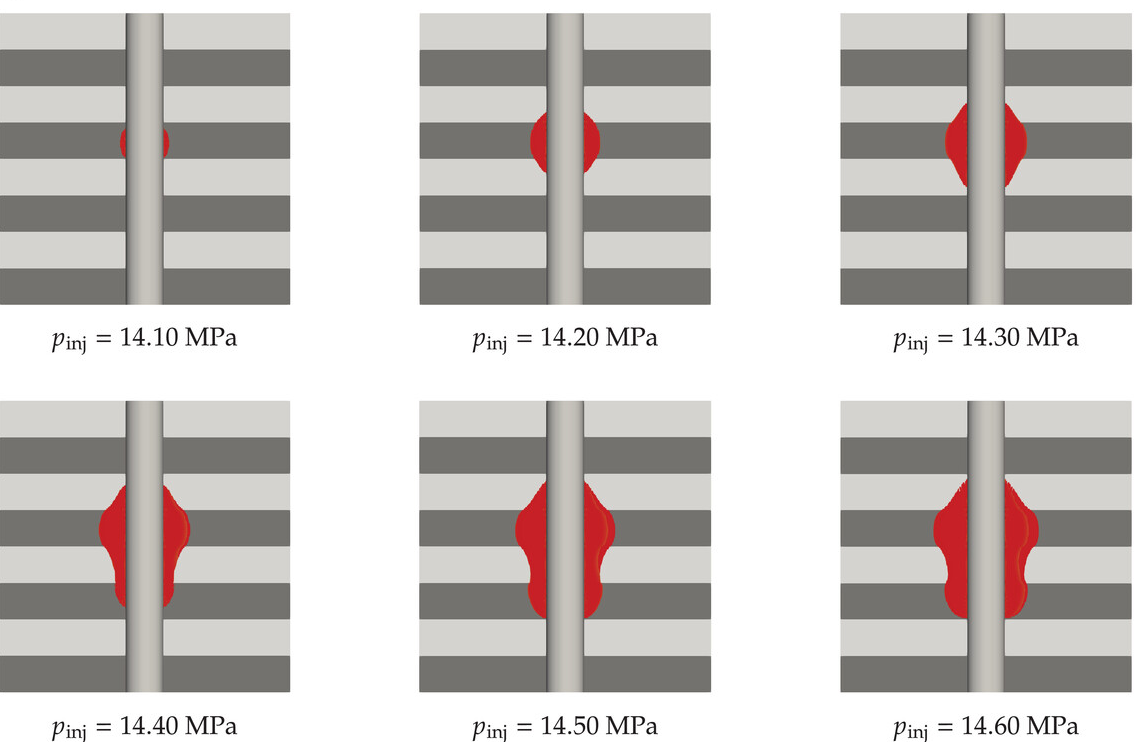
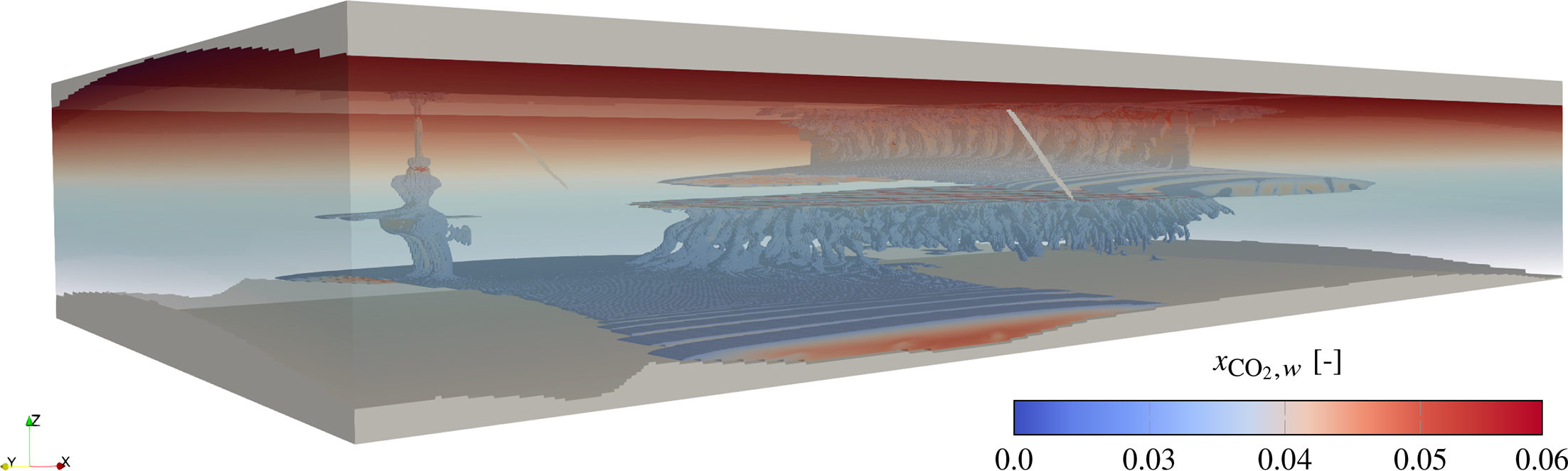
GEOS was originally developed with carbon storage as a primary focus and offers mature capabilities for CO2 injection modeling. This includes multiphase CO2-brine flow with dissolution and residual trapping, coupled geomechanics for caprock integrity and ground-surface deformation, fault reactivation risk assessment, and long-term plume migration prediction. The simulator’s HPC capabilities enable uncertainty quantification workflows with large ensembles of high-fidelity models.
Hydrogen Storage
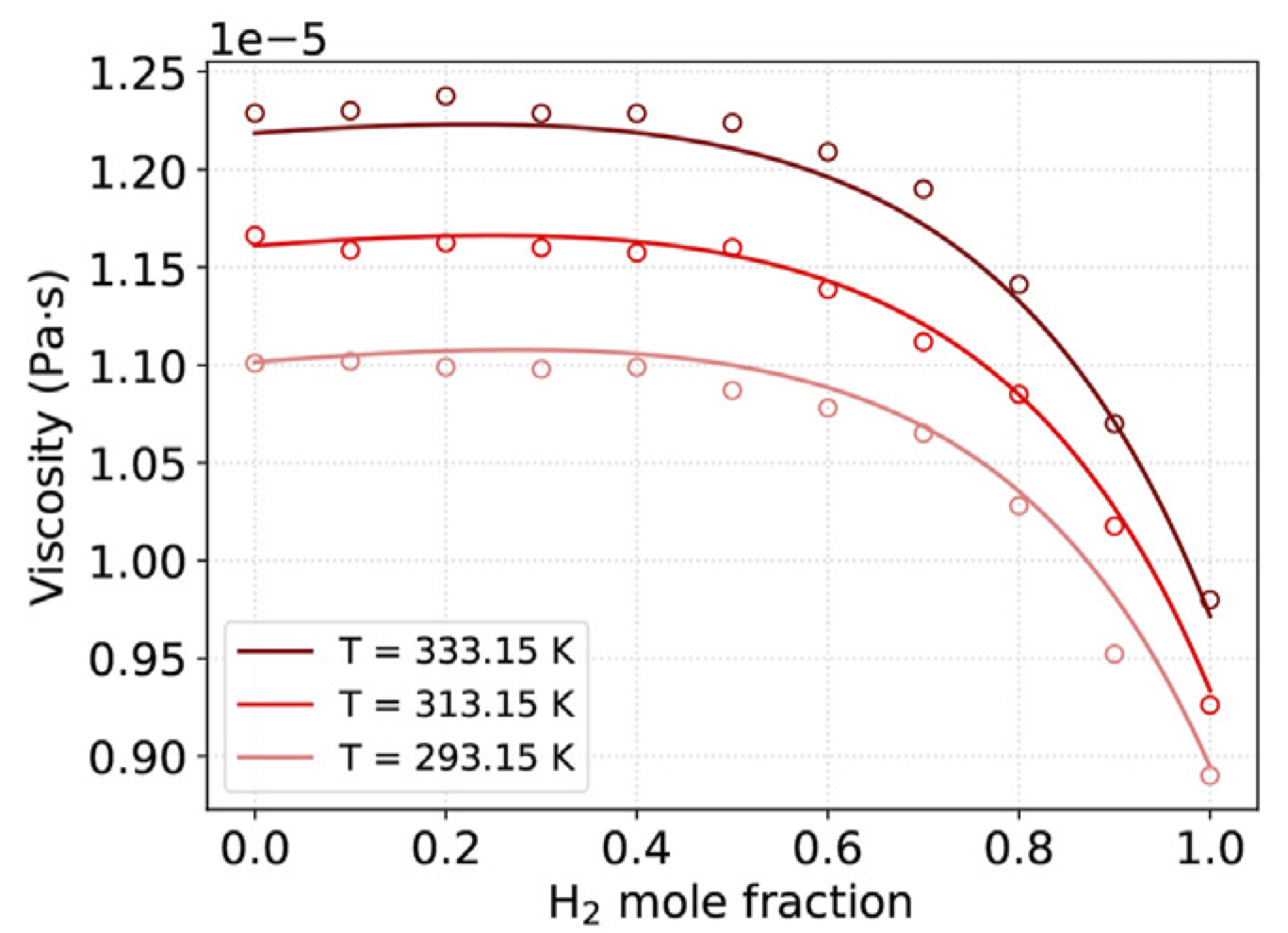
As subsurface hydrogen storage gains attention as a critical element of the energy transition, GEOS provides the multiphysics framework needed to model hydrogen injection and withdrawal cycles in salt caverns, depleted reservoirs, and aquifers. Key modeling capabilities include multiphase flow with hydrogen-specific equations of state, geomechanical cycling effects, and assessment of hydrogen-rock interactions relevant to storage integrity.
Wellbore Stability
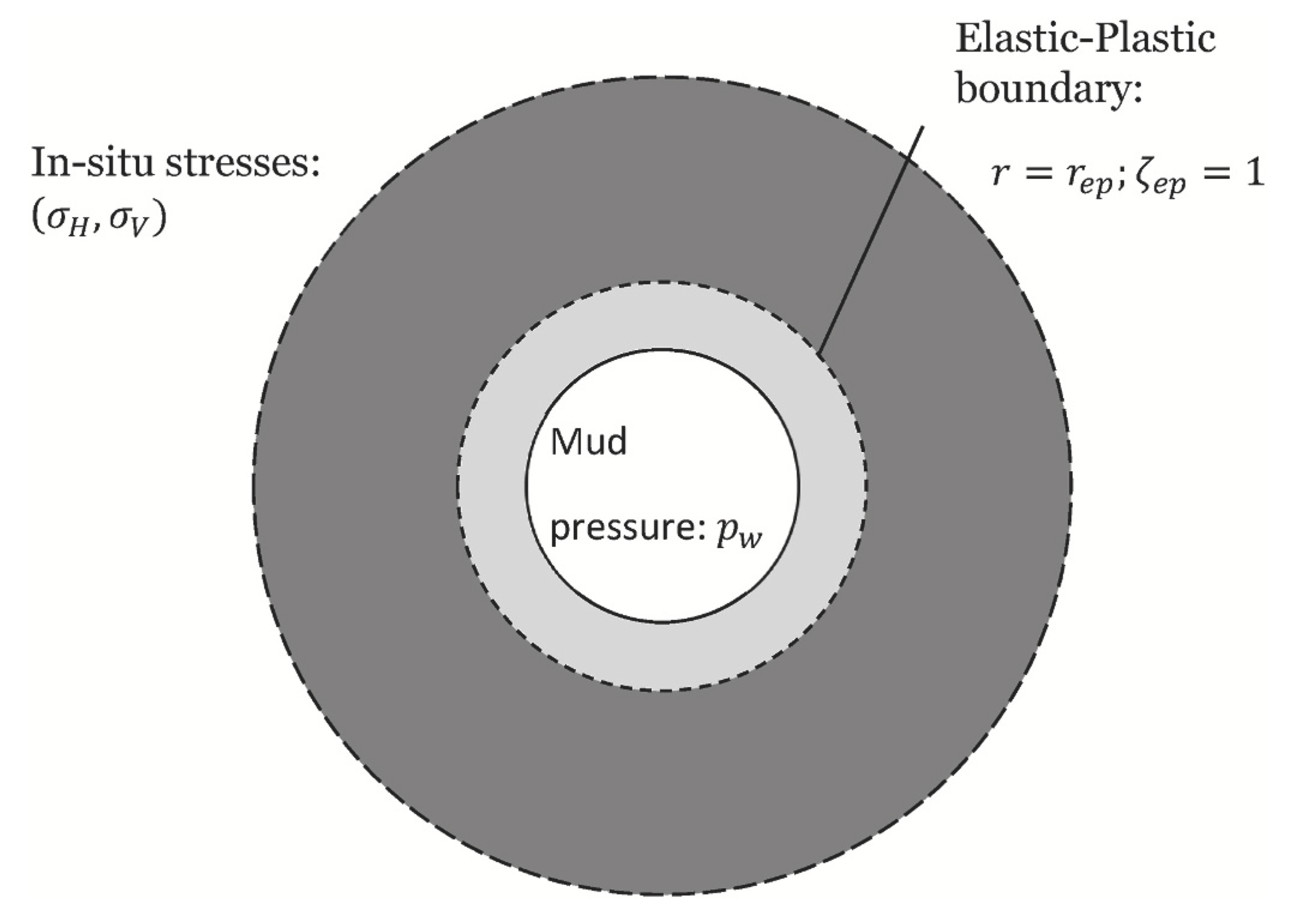
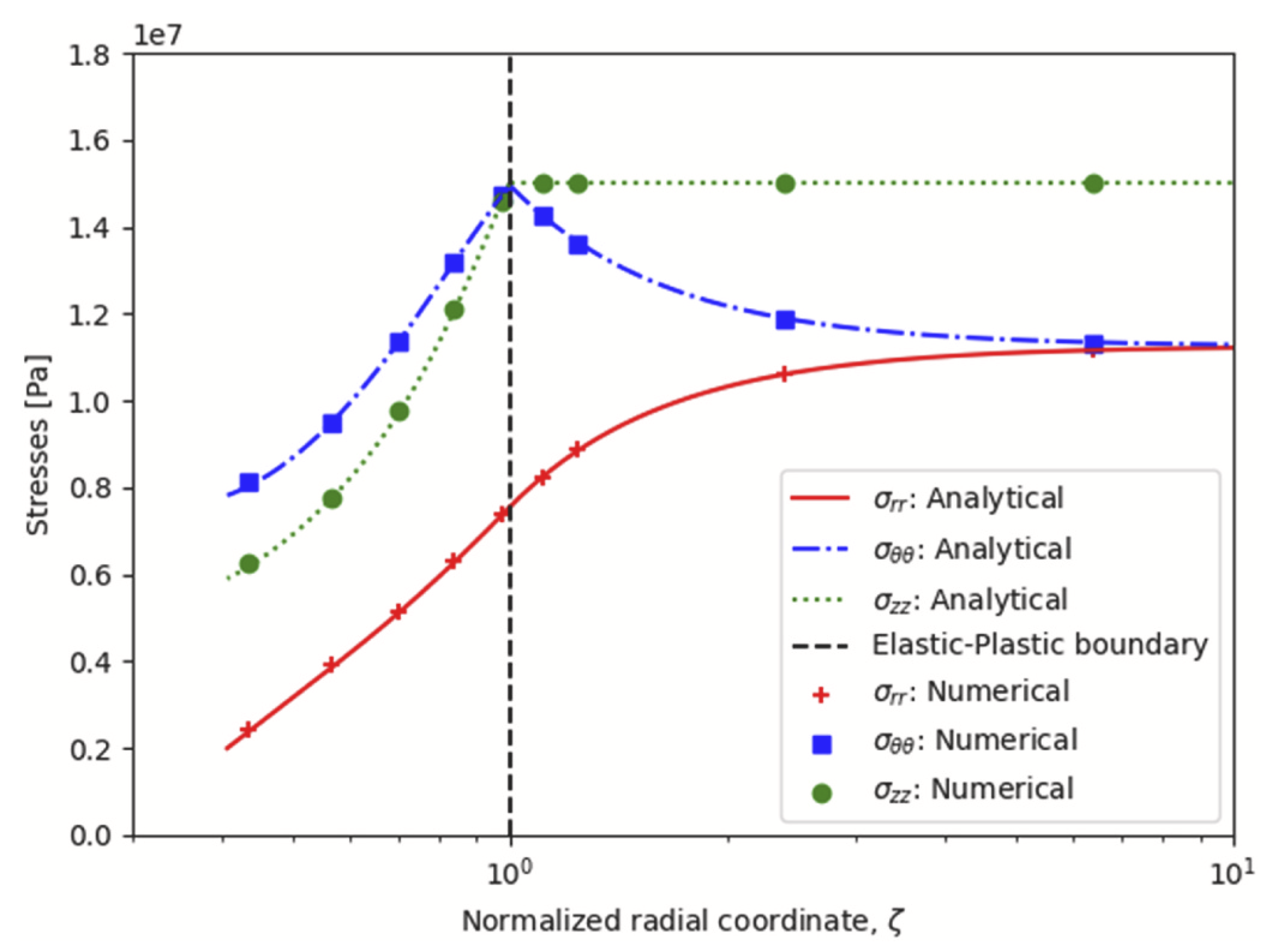
GEOS provides geomechanical analysis capabilities for wellbore integrity, including stress analysis around boreholes in complex stress regimes, casing and cement deformation modeling, thermal stress effects during injection and production, and assessment of completion integrity under reservoir compaction or heave. These capabilities support drilling optimization, well design, and long-term integrity monitoring for all subsurface applications.